
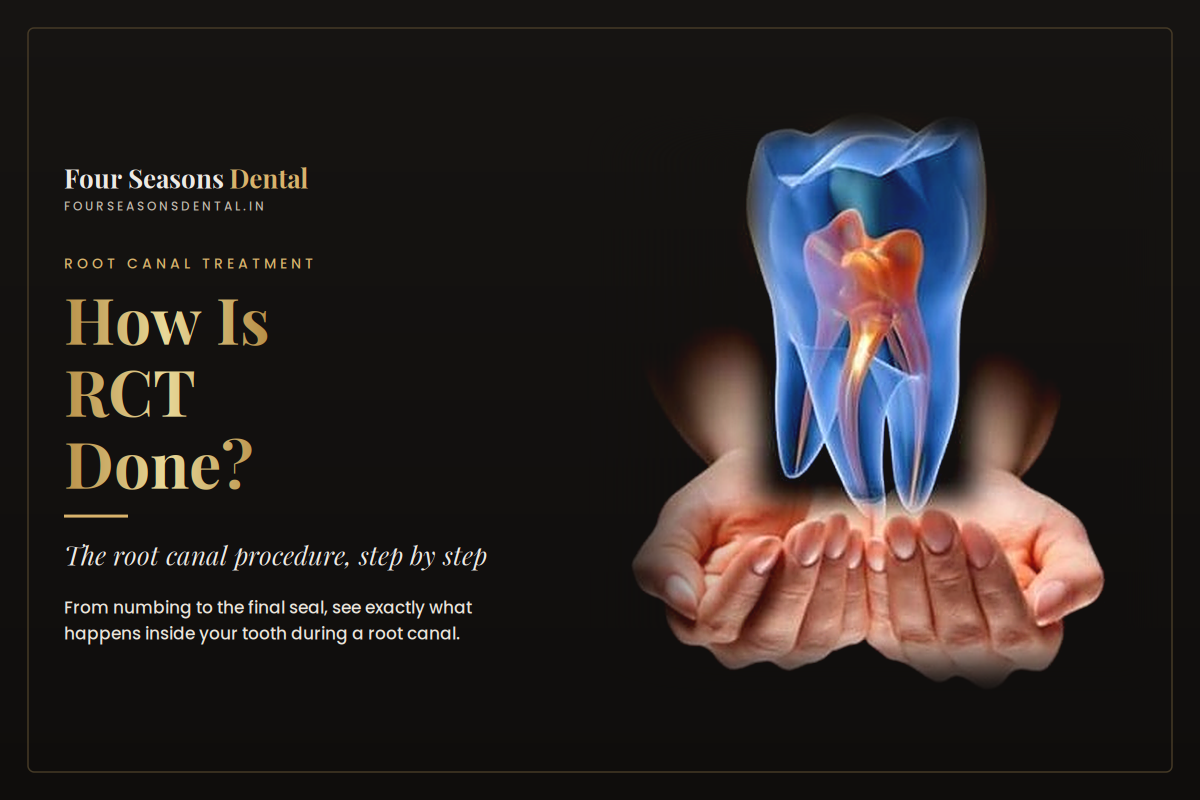
How is RCT done? Your dentist numbs the tooth, makes a small opening in its crown and removes the infected pulp from inside. The empty canals are then cleaned, disinfected, filled and sealed, and the tooth is restored with a filling or crown. Most appointments run 60 to 90 minutes, and with proper numbing you feel pressure rather than pain.
If your dentist has just recommended this treatment, the unknown is usually worse than the procedure itself. This guide covers what happens in RCT from the first X-ray to the final crown, how long each part takes, what you will feel and what to do afterwards.
How Is RCT Done? The Short Answer
RCT stands for root canal treatment. Every tooth has a soft core called the pulp, which carries nerves and blood vessels. Deep decay, a crack or an old leaking filling can let bacteria reach it, and once that happens the pulp cannot heal on its own. Antibiotics do not solve the problem either, because a dead pulp has no blood flow to carry the drug to the bacteria.
So how is RCT done in practice? The dentist reaches the pulp through a small opening, removes it, and shapes the thin canals inside each root with fine flexible files. Disinfecting liquid is flushed through, and the cleaned space is packed with a rubber-like material called gutta-percha. Published studies report success rates of roughly 86 to 98 percent, depending on the tooth and how well it is restored afterwards.
Signs That Lead to an RCT Recommendation
Not every toothache means a root canal. A tooth that stings for a few seconds after something cold and then settles is often just sensitive, or has a shallow cavity. The picture changes when the pain behaves differently.
A throbbing ache that wakes you at night is one warning. Sensitivity to hot or cold that lingers past 30 seconds is another. Swelling on the gum, a small pimple-like bump beside the tooth or a tooth that has slowly turned grey also suggest the nerve is dying or already dead. An X-ray and a few simple tests then confirm the diagnosis, and only after that does treatment begin.
What Happens in RCT: The Procedure Stage by Stage
If you have searched “how is RCT done,” the sequence below is the one you will meet at almost any well-run clinic. The time spent on each part changes from tooth to tooth, but the order does not.
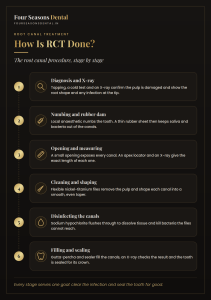
Diagnosis, X-rays and Pulp Testing
The visit opens with questions about your pain. The dentist then taps the tooth gently, applies a cold test and checks the gum for pockets or swelling. A small X-ray shows root length, canal shape and any dark shadow at the root tip, which signals infection in the surrounding bone. Complex molars sometimes need a 3D cone beam scan as well.
Numbing the Tooth and Placing the Rubber Dam
Numbing gel goes on first, followed by a local anaesthetic injected near the tooth. Inflamed teeth can be stubborn to numb, so a second injection is sometimes needed. Once the area is fully numb, a thin sheet of rubber called a dam is stretched over the tooth. It keeps saliva and its bacteria out of the canals and stops disinfectant from reaching your mouth. You can breathe normally through the nose while it is in place.
Opening the Tooth and Finding the Canals
A small hole is drilled through the biting surface of a back tooth, or the back surface of a front tooth. Under magnification, the dentist locates each canal opening. Some are as thin as a few strands of hair, and upper molars often hide a fourth canal that is easy to miss. A missed canal is one of the commonest reasons a root canal fails later, so this stage rewards patience.
Measuring the Canal Length
An electronic apex locator reads the distance to the root tip, and an X-ray confirms the reading. Many canals measure around 20 mm. Cleaning must stop just short of the tip. Stop too early and bacteria stay behind. Go too far and irritants are pushed into the bone.
Cleaning and Shaping the Canals
Flexible nickel-titanium files, narrower than a pencil lead at the tip, remove the pulp and widen each canal into a smooth taper. That shape lets disinfectant flow deep and allows the filling to pack tightly. This is usually the longest part of the appointment.
Disinfecting with Irrigants
Files cannot touch every wall, because root canals have side branches and tiny folds. Sodium hypochlorite, typically at 2.5 to 5 percent strength, is flushed through the canal again and again to dissolve tissue and kill bacteria. A rinse with EDTA then clears the thin debris layer left on the canal walls. Endodontists often stress that this chemical cleaning matters as much as the filing itself.
Filling the Canals
After drying with paper points, the canals are filled with gutta-percha and a sealer, often warmed so it flows into every irregularity. An X-ray then confirms the filling reaches the right depth with no gaps along the way.
Sealing the Tooth
The access hole is closed with a temporary or permanent filling, and the dentist plans the final restoration. When infection is heavy, the canals may instead be medicated and filled at a second visit, which is covered further down.
Steps for RCT on Different Teeth: Canals and Timing
How is RCT done differently from one tooth to another? The method stays the same. What changes is the number of canals and how hard they are to reach.
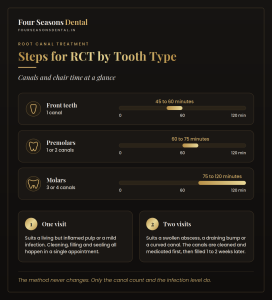
| Tooth | Usual canals | Typical chair time |
|---|---|---|
| Front teeth | 1 | 45 to 60 minutes |
| Premolars | 1 or 2 | 60 to 75 minutes |
| Molars | 3 or 4 | 75 to 120 minutes |
Molars take longest because they carry the heaviest chewing load and have the most complicated root anatomy. The steps for RCT stay identical, only repeated for each canal. If you are comparing clinics, ask whether they use a rubber dam, an apex locator and magnification, since all three affect how thoroughly the canals get cleaned. Those details separate careful root canal treatment in Surat from a rushed job.
Single Visit or Two Visits? How Is RCT Done in Practice
A tooth with a living but inflamed pulp, or a mild infection, can usually be finished in one visit. A tooth with a swollen abscess, a draining bump or a very curved canal is often split into two. The canals are cleaned at the first appointment, and a calcium hydroxide paste is left inside to keep working against bacteria. The second visit typically comes one to two weeks later, when the permanent filling goes in.
Neither approach is better by default. The deciding factor is how much infection is present, not how busy your week is. A dentist who insists on finishing a badly infected tooth in one sitting, or who stretches a simple case across four visits, deserves a second question.
Does RCT Hurt? How Is RCT Done Without Pain
The procedure itself should not hurt. The pain people link with root canals comes from the infected tooth beforehand, not from the treatment that relieves it. During treatment you will notice pressure, vibration and the sound of the handpiece. Tell your dentist at once if you feel anything sharp, because extra anaesthetic is quick to add.
Afterwards, mild tenderness for two to three days is normal, particularly when biting down. Ibuprofen or paracetamol at the dose on the label usually covers it, and most people return to work the next day. Pain that grows worse after day three, visible swelling or a bite that feels suddenly high all call for a phone call to the clinic.
Myths About RCT, Busted
Root canals do not make you ill. The claim traces back to research from the 1920s that has since been thoroughly discredited, and modern reviews find no link between treated teeth and conditions such as arthritis or heart disease.
Another belief says extraction is the cleaner option. Pulling a tooth leaves a gap, the neighbouring teeth drift, the jawbone beneath the gap slowly shrinks, and replacing the tooth later costs more than saving it would have. Extraction makes sense only when the tooth truly cannot be restored.
The most dangerous myth is that vanished pain means the problem has gone. When the nerve dies the pain stops, but bacteria carry on, and an abscess can swell without warning weeks later.
What Home Care Can and Cannot Do
Home care can buy you comfort and a little time. A cold compress on the cheek and an over-the-counter painkiller taken as the label directs both calm symptoms. Chewing on the other side and sleeping with your head raised help too, and warm salt water rinses keep the area clean.
What home care cannot do is remove infected pulp, drain an abscess or make a damaged nerve recover. Clove oil may numb the surface for a few minutes, but it treats nothing, and the infection keeps spreading in the meantime. Facial swelling, fever or trouble swallowing or breathing needs same-day emergency care, not another night of waiting.
Aftercare and Why the Crown Matters
Until the permanent restoration is placed, avoid biting hard foods on the treated tooth. Brush and floss as normal. A temporary filling can wear away within a few weeks, so do not delay the next appointment.
A root-treated tooth no longer has a living nerve, but it is still a working tooth. It also has less structure left, because decay and the access hole remove a good deal of enamel and dentine. Back teeth take heavy chewing forces and can split along a root without warning. That is why dentists usually recommend a dental crown for treated molars and premolars, while a front tooth with plenty of intact structure may need only a filling.
When RCT Fails or the Tooth Cannot Be Saved
Occasionally a treated tooth gets reinfected, usually because of a missed canal, a leaking filling or fresh decay. How is RCT done again on such a tooth? The dentist reopens it, removes the old filling material, cleans the canals once more and refills them. A minor surgery called an apicoectomy can deal with stubborn infection at the root tip.
Some teeth are beyond saving. A vertical root fracture, or too little healthy structure to hold a restoration, leaves extraction as the only option. A dental implant is then the long-term replacement, since it protects the jawbone and spares the neighbouring teeth from being ground down. The plan for it can be made alongside the extraction.
Book Your Root Canal Consultation
Still asking, “How is RCT done on my tooth?” The quickest answer comes from an examination and an X-ray. If a tooth aches at night, throbs when you bite or has a bump on the gum beside it, book a consultation with Dr. Jay Patel at Four Seasons Dental. You will leave with a clear diagnosis, a plan for your specific tooth and an honest estimate of the visits and cost involved, well before the pain turns into an emergency.
Frequently Asked Questions About RCT
Can I eat before an RCT appointment?
Yes. Have a normal meal an hour or two beforehand, since you will not be able to chew comfortably for several hours after the numbing. Once the appointment ends, wait until feeling returns before eating so you do not bite your cheek or tongue.
Is RCT safe during pregnancy?
Yes. Dental X-rays taken with a lead apron deliver very little radiation, and the second trimester is generally the most comfortable time for longer appointments. An infected tooth should not be left untreated, since the infection itself poses a greater risk. Tell your dentist how far along you are.
How is RCT done on a child’s tooth?
Baby teeth get a gentler version, called a pulpotomy or pulpectomy. The dentist removes only the infected pulp and fills the space with a resorbable material, not gutta-percha, so the permanent tooth growing underneath can still push through at the right time.
How long does a root-treated tooth last?
With a well-fitted restoration and good hygiene, many last 10 to 20 years, and plenty last a lifetime. Regular check-ups with an occasional X-ray help catch any trouble at the root tip early.
Will a treated tooth change colour?
It can. Without a living pulp, a tooth may darken slowly over the years. If that bothers you, ask about internal whitening, where a bleaching agent is placed inside the tooth to restore its shade