
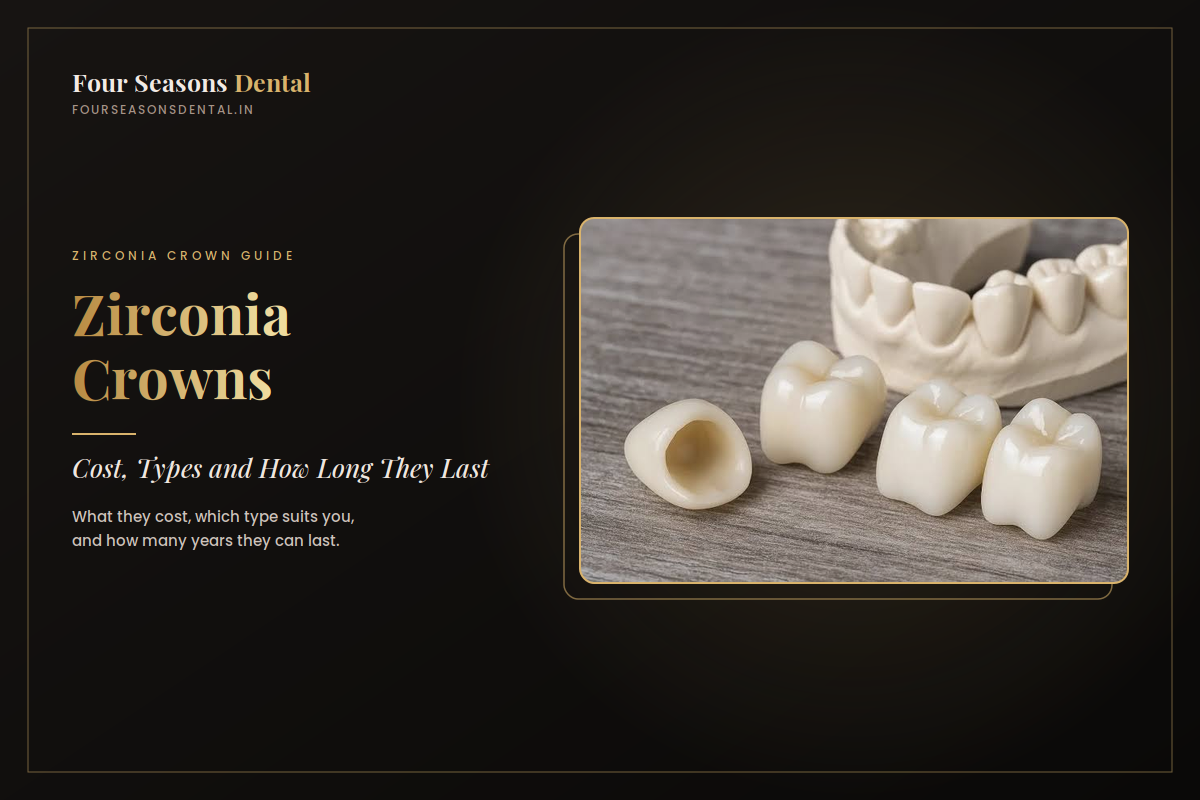
A zirconia crown typically costs between ₹8,000 and ₹18,000 per tooth in Surat, and with proper care it can last 15 to 20 years, sometimes longer. That’s the short answer. The rest comes down to which type of zirconia you choose, where the crown sits in your mouth, and how it’s fitted.
Zirconia has become one of the most requested crown materials at our clinic over the past few years, and for good reason. It combines the strength dentists want with an appearance patients actually like. But “zirconia crown” isn’t one single product. There are several versions, and picking the wrong one for the wrong tooth is where most complaints come from.
What Is a Zirconia Crown?
A zirconia crown is a dental cap made from zirconium dioxide, a crystalline ceramic that’s milled using computer-aided design rather than hand-layered the way older crowns were. The material was originally developed for industrial use in things like hip implants before dentistry adopted it, which tells you something about how tough it is.
Unlike metal crowns, zirconia contains no nickel, no alloy, and no dark metal line that shows at the gum edge over time. Unlike older all-ceramic crowns, it doesn’t chip as easily under bite force. That combination of strength and a tooth-like look is why zirconia crowns for teeth have largely replaced porcelain-fused-to-metal (PFM) as the default recommendation for back teeth in many clinics, including ours.
Zirconia crowns are manufactured using CAD/CAM milling from a solid block, then sintered at extremely high temperatures to reach full hardness. This is also why a same-day zirconia crown is possible in clinics with in-house milling, though same-day crowns use a slightly softer milling-stage material compared to a lab-fired crown.
Types of Zirconia Crowns
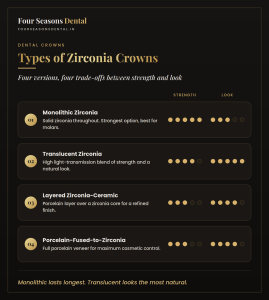
Not every zirconia crown is identical, and the type matters more than most patients realize when it comes to how it looks and how long it survives.
Monolithic Zirconia Crowns
This is solid zirconia all the way through, with no layering. It’s the strongest version available and the one we recommend most often for molars, where chewing force is highest. The trade-off is that early monolithic zirconia could look slightly opaque. Newer high-translucency formulas have mostly closed that gap.
Layered (Zirconia-Ceramic) Crowns
Here, a zirconia core is topped with a thin layer of porcelain to improve the look, particularly for front teeth where aesthetics matter more than raw bite force. The porcelain layer can chip over years of use, which is the one durability trade-off layered crowns carry compared to monolithic ones.
Translucent (High-Translucency) Zirconia
A newer generation of zirconia milled to transmit light closer to natural enamel. It sits between monolithic and layered crowns on both strength and appearance, and it’s become our go-to recommendation for visible teeth where patients want strength without a layered porcelain shell.
Porcelain-Fused-to-Zirconia (PFZ)
Similar in concept to layered zirconia but built slightly differently, with a full porcelain veneer over a zirconia substructure for maximum cosmetic control. This option costs more and is usually reserved for front teeth in smile-focused cases.
Zirconia Crown Cost in Surat
Here’s where pricing actually lands, type by type:
Monolithic zirconia crowns generally run ₹8,000 to ₹12,000 per tooth. Translucent zirconia sits a bit higher, around ₹10,000 to ₹15,000, reflecting the more refined milling block. Layered zirconia-ceramic and PFZ crowns, which need extra lab work for the porcelain layer, typically cost ₹14,000 to ₹18,000 per tooth.
A few things push the price up or down within those ranges. The lab producing the crown matters, since imported zirconia blocks cost more than domestic ones. Whether the tooth needs a root canal treatment first adds to the overall treatment cost, separate from the crown itself. And front-tooth cases often need more shade-matching appointments than molars, which some clinics factor into the fee.
Compare that to a PFM crown, which usually costs ₹4,000 to ₹8,000 but carries metal, a visible gumline shadow over time, and a shorter average lifespan. The price gap exists because you’re paying for material performance, not just appearance.
How Long Does a Zirconia Crown Last?
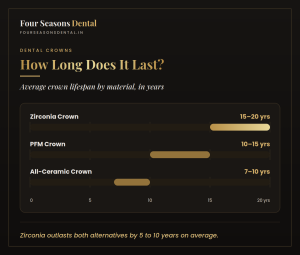
Most zirconia crowns last 15 to 20 years, and we’ve seen well-maintained ones go longer. Compare that to PFM crowns, which average 10 to 15 years, and all-ceramic crowns without zirconia, which often need replacement at 7 to 10 years due to chipping or fracture.
Longevity depends on three things more than anything else. Bite force matters, since someone who grinds their teeth at night will wear down any crown faster, zirconia included, unless they wear a night guard. Fit quality matters just as much; a crown milled and seated precisely distributes bite force evenly, while a poorly fitted one concentrates stress at one point and fails early. And oral hygiene around the crown margin determines whether the supporting tooth structure stays healthy underneath.
Monolithic zirconia tends to outlast layered zirconia specifically because there’s no porcelain veneer to chip off. If longevity is your main priority and the tooth isn’t highly visible, monolithic is usually the stronger long-term bet.
Zirconia Crowns vs Other Options
Patients often ask us to settle the comparison directly, so here it is in plain terms. Metal crowns are the cheapest and nearly indestructible under bite force, but they look like metal and aren’t an option for visible teeth. All-ceramic crowns without zirconia look the most natural of the older materials but are the most prone to chipping under heavy chewing. Zirconia sits above both for most patients because it closes the gap between strength and appearance that neither older option fully solved.
The one place zirconia doesn’t automatically win is cost. If budget is the deciding factor and the tooth is a back molar nobody sees, PFM remains a reasonable, cheaper choice. For anything visible, or for anyone who wants a restoration they won’t think about again for a decade and a half, zirconia earns its price.
Caring for a Zirconia Crown
A zirconia crown doesn’t need special toothpaste or unusual maintenance. Brush and floss it like a natural tooth, keep up with six-monthly cleanings, and avoid using your teeth as tools to open packaging or crack shells, since that habit damages natural enamel just as readily as it damages a crown.
If you grind your teeth, mention it before treatment. A night guard protects the investment and prevents the hairline fractures that eventually show up in grinders who skip this step.
Myth: “Zirconia Crowns Never Need Replacing”
This one comes up often enough to address directly. Zirconia is strong, not immortal. While 15 to 20 years is a realistic average lifespan, the crown can still fail early if the underlying tooth develops decay at the margin, if the bite isn’t adjusted correctly at placement, or if it’s exposed to repeated heavy trauma. A zirconia crown protects what’s underneath it, but it doesn’t make the tooth immune to every risk a natural tooth faces. Regular checkups still matter, even with a crown this durable.
Ready to Discuss Your Options?
Whether you need a single dental crown or bridge or a crown following a root canal treatment, the right material depends on which tooth, how it bites, and what you want it to look like. Patients working toward a broader smile upgrade often combine crown work with our cosmetic dentistry consultations to plan the full picture at once.
Frequently Asked Questions
Is a zirconia crown better than a porcelain crown?
For back teeth facing heavy bite force, yes, zirconia resists chipping and fracture better than standard porcelain. For front teeth where light transmission matters most, high-translucency zirconia and traditional porcelain can look comparably natural, and the choice often comes down to the dentist’s assessment of your bite.
Can a zirconia crown be whitened?
No. Zirconia doesn’t respond to whitening treatments the way natural enamel does. If whitening is part of your plan, it needs to happen before the crown is made so the lab can match the final shade.
Does getting a zirconia crown hurt?
The tooth is numbed before any shaping happens, so the procedure itself isn’t painful. Mild sensitivity for a few days afterward is common, particularly with cold foods, and usually settles on its own.
How many visits does a zirconia crown take?
A lab-made zirconia crown typically needs two visits, one to shape the tooth and take an impression, and a second a week or two later to fit the finished crown. Clinics with in-house milling can sometimes complete it in a single visit.
Can a cracked zirconia crown be repaired?
Rarely. Because zirconia is a single hard material, a genuine crack usually means the crown needs replacing rather than patching. Minor chips on the porcelain layer of a layered zirconia crown can sometimes be smoothed or repaired, but monolithic fractures typically can’t.