
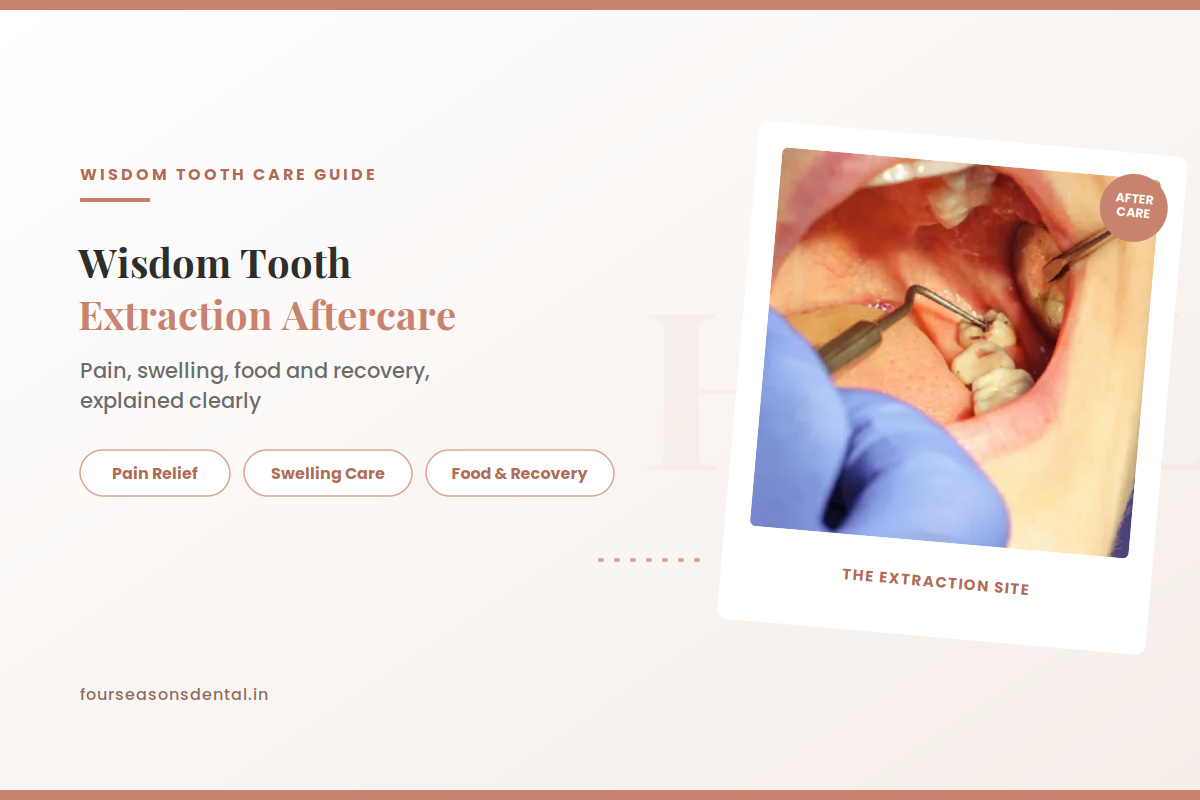
Wisdom tooth extraction aftercare mostly comes down to three things: protecting the blood clot, controlling swelling for the first 48 hours, and easing back into normal food by day four or five. Most patients feel back to themselves within a week, though full bone healing at the socket site takes several months. Here is exactly what to expect and what to do at each stage.
Why Wisdom Tooth Extraction Aftercare Matters So Much
The socket left behind after a wisdom tooth extraction is deeper and closer to nerves and jaw muscles than most other extraction sites, especially for lower third molars that were impacted. A blood clot forms in that socket within the first hour, and this clot is the foundation of everything that follows. Dislodge it, and you risk a dry socket, which is easily the most painful and most preventable complication in oral surgery. Good wisdom tooth extraction aftercare is really just a set of habits that protect that clot while your body gets on with healing underneath it.
At Four Seasons Dental, we see the same pattern again and again: patients who follow the first 72 hours carefully have dramatically smoother recoveries than those who go back to spicy food, straws, or heavy exercise too soon.
Pain After Wisdom Tooth Extraction: What’s Normal and What Isn’t
Pain after wisdom tooth extraction typically peaks between 6 and 12 hours post-surgery, right as the local anaesthetic wears off. For a simple extraction, over-the-counter ibuprofen (400mg every 6 hours, taken with food) controls most discomfort. Impacted extractions, particularly lower wisdom teeth that required bone removal, often need a combination of ibuprofen and paracetamol alternated every 3 hours, or a short course of prescription painkillers if your dentist provides one.
Pain should decrease steadily from day two onward. A useful rule: if pain is getting worse on day four or five instead of better, that’s not normal healing, and you should call your dentist rather than wait it out. Throbbing pain that radiates to the ear, combined with a bad taste in the mouth, often signals dry socket rather than ordinary post-surgical discomfort.
Cold compresses held against the cheek for 15 minutes on, 15 minutes off, work well for the first day. After 48 hours, switch to warm compresses if any residual soreness or stiffness in the jaw persists.
Swelling After Wisdom Tooth Extraction: The 48-Hour Rule
Swelling after wisdom tooth extraction follows a fairly predictable curve. It builds for the first two days, peaks around day two or three, and then starts resolving from day four onward. This is normal even when the swelling looks alarming in the mirror. Lower impacted wisdom teeth tend to cause more visible swelling than upper ones because of how close the extraction site sits to the cheek and jaw muscles.
To manage swelling after wisdom tooth extraction:
Keep your head elevated, even while sleeping, using an extra pillow for the first two nights. Apply an ice pack wrapped in a thin cloth to the outside of the cheek for the first 24 hours only. After that window, heat is more useful than ice for loosening tight jaw muscles. Avoid bending over or lying flat for long periods in the first two days, since this increases blood flow to the head and worsens swelling.
If swelling is still increasing past day four, or if it’s accompanied by fever or difficulty opening your mouth beyond a finger’s width, that combination points toward infection rather than typical post-op inflammation, and it needs a dental review.
Wisdom Tooth Extraction Recovery Timeline
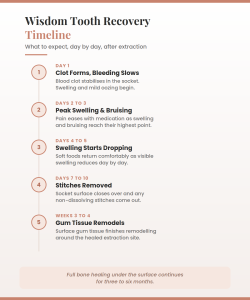
Wisdom tooth extraction recovery time varies by how complex the extraction was, but here is a realistic breakdown most patients can expect:
First 24 hours: Bleeding tapers off, the clot stabilises, and swelling begins. Rest is the priority. Days 2 to 3: Peak swelling and bruising, pain gradually easing with medication. Days 4 to 5: Swelling starts visibly reducing, most patients can return to soft-food meals without discomfort. Day 7 to 10: Stitches (if non-dissolvable) are typically removed, and the socket surface has mostly closed over. Weeks 3 to 4: Gum tissue has largely remodelled, though the deeper bone socket continues filling in for months.
Full wisdom tooth extraction recovery time for the underlying bone can run three to six months, particularly for deeply impacted teeth, but this doesn’t affect daily function or comfort once the surface tissue has healed.
Does Wisdom Tooth Extraction Hurt? Setting Expectations Before Surgery
Does wisdom tooth extraction hurt during the procedure itself? No, not if it’s done correctly. Local anaesthesia, sometimes combined with sedation for complex impacted cases, numbs the area fully during surgery. What patients actually feel is pressure, not pain, as the tooth is loosened and removed.
The discomfort people associate with wisdom tooth removal happens afterward, once anaesthesia fades, and it’s manageable with the pain control steps above. Patients who’ve had wisdom teeth removed under proper anaesthesia at a clinic offering laser dentistry in surat techniques often report less post-operative discomfort, since laser-assisted soft tissue work tends to cause less trauma to the surrounding gum than traditional methods.
Food After Wisdom Tooth Extraction: What to Eat and When
Food choices in the first week directly affect how well your socket heals. The goal is to avoid disturbing the clot while still getting enough nutrition to support recovery.
Day 1: Cold, soft foods only. Think chilled yoghurt, buttermilk, mashed banana, or a smoothie eaten with a spoon, never a straw. Suction from a straw can dislodge the clot and trigger dry socket.
Days 2 to 3: Lukewarm soups, khichdi, mashed potatoes, scrambled eggs, and idli soaked soft. Nothing hot, since heat increases blood flow to the area and can restart bleeding.
Days 4 to 5: Soft pasta, well-cooked vegetables, paneer, and rice dishes, chewing on the opposite side of the mouth.
Day 7 onward: Most patients can gradually reintroduce a normal diet, avoiding hard, crunchy, or seed-heavy foods like nuts, chips, and popcorn until the socket has fully closed over, usually around two weeks.
Skip anything spicy, acidic, or alcoholic for at least five days. These irritate exposed tissue and can slow healing considerably.
Wisdom Tooth Extraction Aftercare: Daily Do’s and Don’ts
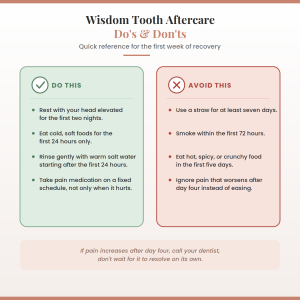
Here is a practical rundown of what actually helps and what actively works against your recovery.
Rinse gently with warm salt water starting 24 hours after surgery, never sooner, and never with force. Brush your teeth as normal from day one, but avoid the extraction site directly for the first few days. Don’t smoke for at least 72 hours; smoking is one of the biggest risk factors for dry socket. Avoid vigorous exercise for a week, since raised heart rate and blood pressure can dislodge the clot or restart bleeding.
Patients who already maintain a regular teeth cleaning routine tend to recover with fewer complications, simply because their gum tissue starts from a healthier baseline before surgery.
Myth-Busting: What Home Care Can and Cannot Do
There’s a common belief that clove oil or warm salt water alone can “heal” an infected extraction site or speed up bone regrowth. This isn’t accurate. Salt water rinses reduce bacterial load and soothe irritated tissue, which genuinely helps, but they cannot treat an active infection or reverse dry socket once it’s set in. Clove oil provides temporary numbing at best and offers no antibacterial protection strong enough to substitute for a dental visit.
Similarly, no amount of home care can regenerate bone faster than the body’s natural three-to-six-month timeline. What home care genuinely achieves is keeping the site clean, reducing swelling, and managing pain while your body does the actual repair work. It supports healing; it doesn’t replace professional treatment when something has gone wrong.
When to See a Dentist After Wisdom Tooth Extraction
Contact your dentist if you notice fever above 100.4°F, pus or foul discharge from the socket, pain that worsens after day three instead of improving, numbness in the lip or chin lasting more than a day, or bleeding that doesn’t slow down after firm gauze pressure for 30 minutes. Occasionally, wisdom tooth crowding has knock-on effects on nearby teeth alignment, and patients considering long-term correction sometimes end up discussing options with a best orthodontist once extraction healing is complete.
Book Your Wisdom Tooth Consultation
If your wisdom teeth are causing pain, crowding, or repeated infections, don’t wait for it to get worse. Book a consultation with our team at Four Seasons Dental and we’ll walk you through whether extraction is needed and exactly what your personal recovery will look like. Visit our homepage to get started, or browse our blog for more guides on oral surgery and recovery.