
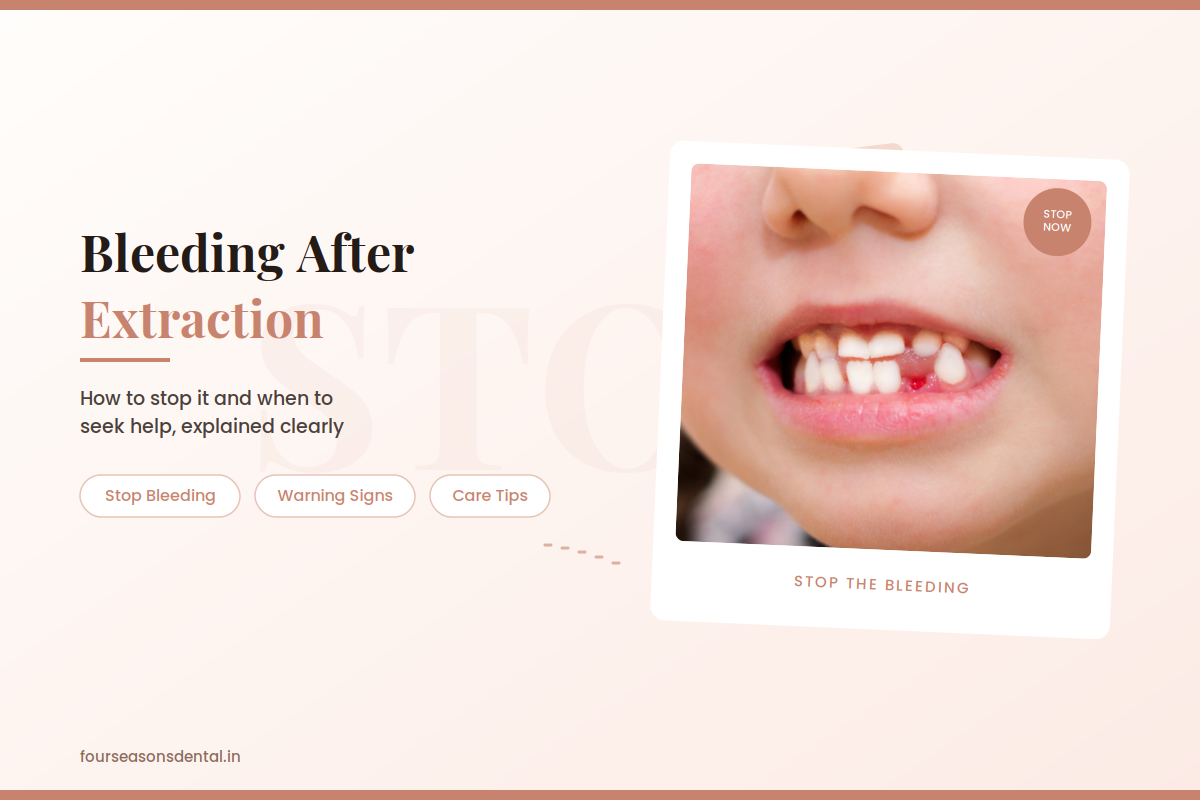
The fastest way to stop bleeding after tooth extraction is to bite down firmly on a folded gauze pad placed directly over the socket for 30 to 45 minutes without checking on it early. Light oozing and pink-tinged saliva are normal for the first 24 hours, but steady, bright red bleeding that soaks through gauze every 15 to 20 minutes is not, and it needs a different approach. Knowing how to stop bleeding after tooth extraction properly, and recognizing when it’s crossed into something that needs attention, makes the first day after the procedure far less alarming.
At Four Seasons Dental, this is one of the most common concerns patients call us about within the first few hours of going home, so it’s worth walking through exactly what’s normal and what isn’t.
How to Stop Bleeding After Tooth Extraction
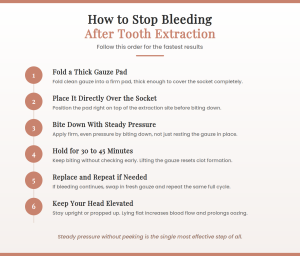
The first and most effective step is pressure. Fold a piece of clean gauze into a thick pad, place it directly over the socket, and bite down with steady, firm pressure for 30 to 45 minutes. Resist the urge to peek every five minutes, since lifting the gauze breaks the pressure and resets the clock on clot formation.
If bleeding continues after the first gauze pad, replace it with a fresh one and repeat the same 30 to 45 minute cycle. Most patients find the bleeding has slowed considerably or stopped entirely by the second round. Keeping your head elevated, even while resting on the sofa or in bed, also helps, since lying flat increases blood flow to the head and can prolong oozing.
Some extractions bleed a little more than others simply because of how much tissue was involved. Procedures done with a gentler, more precise approach tend to cause less bleeding overall. Laser dentistry in Surat is one technique we sometimes use for this reason, since it seals small blood vessels as it works and typically leaves patients with noticeably less bleeding in the hours immediately after.
What Counts as Normal Bleeding After Tooth Extraction
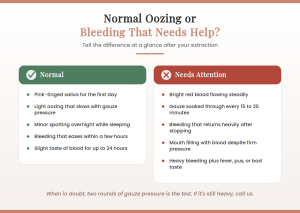
Bleeding after tooth extraction naturally looks worse than it is, mainly because saliva mixes with even a small amount of blood and makes it appear far heavier than the actual volume. A reasonable rule of thumb: if you can control it with steady gauze pressure and it noticeably lessens within a few hours, it’s within the normal range.
Pink or slightly red-tinged saliva for the rest of the extraction day is expected. Minor oozing overnight, especially if you shift position in your sleep, is also common. What’s not normal is bleeding that continues to flow steadily, fills your mouth quickly, or comes back heavily hours after it seemed to have stopped.
Tooth Extraction Aftercare in the First 24 Hours
Good tooth extraction aftercare in the first day does more to prevent bleeding than almost anything else you do afterward. Stick to soft, cool foods like yogurt or mashed potatoes, and avoid anything hot, since heat encourages blood flow to the area and can restart oozing that had already settled.
Rest matters more than people expect. Physical exertion raises blood pressure and heart rate, both of which can dislodge a clot that’s still forming. Plan to take it easy for at least the rest of the day, skip the gym, and save any strenuous activity for later in the week.
Once the socket has closed and the site feels stable, usually after a week or two, most patients schedule a routine visit for teeth cleaning in Surat to keep the surrounding teeth and gums in good shape during the rest of the healing process. It’s a small step, but it helps prevent plaque buildup near a site that’s still technically vulnerable.
Precautions After Tooth Extraction That Prevent Bleeding
A few precautions after tooth extraction make the difference between a clot that holds and one that gets disturbed too soon.
Avoid using a straw for at least 3 to 5 days, since the suction it creates can pull the clot loose. Don’t spit forcefully, rinse vigorously, or swish water around the socket during the first 24 hours, even if it’s tempting to clear away the taste of blood. Smoking is particularly risky, both because of the suction involved and because nicotine restricts blood flow needed for clotting.
Alcohol also thins the blood slightly and should be avoided for at least the first day or two. If you’re on prescribed blood thinners, don’t stop taking them without talking to your doctor first, but do let your dentist know beforehand so they can plan the extraction and your aftercare accordingly.
Home Remedies That Actually Help Stop Bleeding
Beyond plain gauze, a few home approaches genuinely help when bleeding after tooth extraction is a bit more stubborn than usual.
A moistened black tea bag, pressed against the socket the same way as gauze, can be surprisingly effective. Black tea contains tannic acid, which helps constrict blood vessels and supports clot formation more actively than gauze alone. Press it firmly for 20 to 30 minutes and it often settles bleeding that gauze on its own hadn’t fully controlled.
Cold compresses on the outside of the cheek help too, though more for swelling than bleeding directly. Keeping calm also plays a real role, since anxiety raises blood pressure, which can keep a slow bleed going longer than it otherwise would.
When Bleeding After Tooth Extraction Means Something Is Wrong
Most bleeding after tooth extraction resolves well within the first few hours using pressure alone. A few signs mean it’s time to call your dentist rather than keep trying home methods. Bleeding that hasn’t slowed after two full rounds of gauze pressure, blood that’s bright red and flowing rather than oozing, or a mouth that keeps filling with blood despite firm pressure all warrant a same-day call.
Certain patients are more prone to prolonged bleeding, including those on blood thinning medication, people with clotting disorders, and anyone who had a particularly complex or surgical extraction. If you fall into one of these groups, mention it to your dentist beforehand so they can plan accordingly and give you tailored aftercare instructions.
Once bleeding has fully settled and the site heals over the following months, some patients look at restoring the gap left behind. For a missing molar or front tooth, dental implants in Surat remain one of the most durable long-term options once the site is confirmed to be fully healed and stable.
Myths About Bleeding After Tooth Extraction
Myth: More bleeding means the dentist made a mistake. Bleeding volume varies by tooth location, extraction complexity, and individual clotting tendency, not by how well the procedure was performed.
Myth: Rinsing with water helps clear it up faster. Rinsing, especially in the first 24 hours, is more likely to dislodge the clot and restart bleeding than to help it stop.
Myth: You should avoid all pressure because it hurts. Gentle discomfort during gauze pressure is normal and expected. Avoiding pressure out of caution actually slows down the one thing that stops the bleeding fastest.
Concerned About Bleeding After Your Extraction?
If you’re currently managing bleeding after tooth extraction and it doesn’t seem to be settling, or you have an upcoming procedure and want to know what to expect, book a consultation with our team at Four Seasons Dental. We’ll make sure you leave with clear aftercare instructions and a direct line to us if anything feels off.