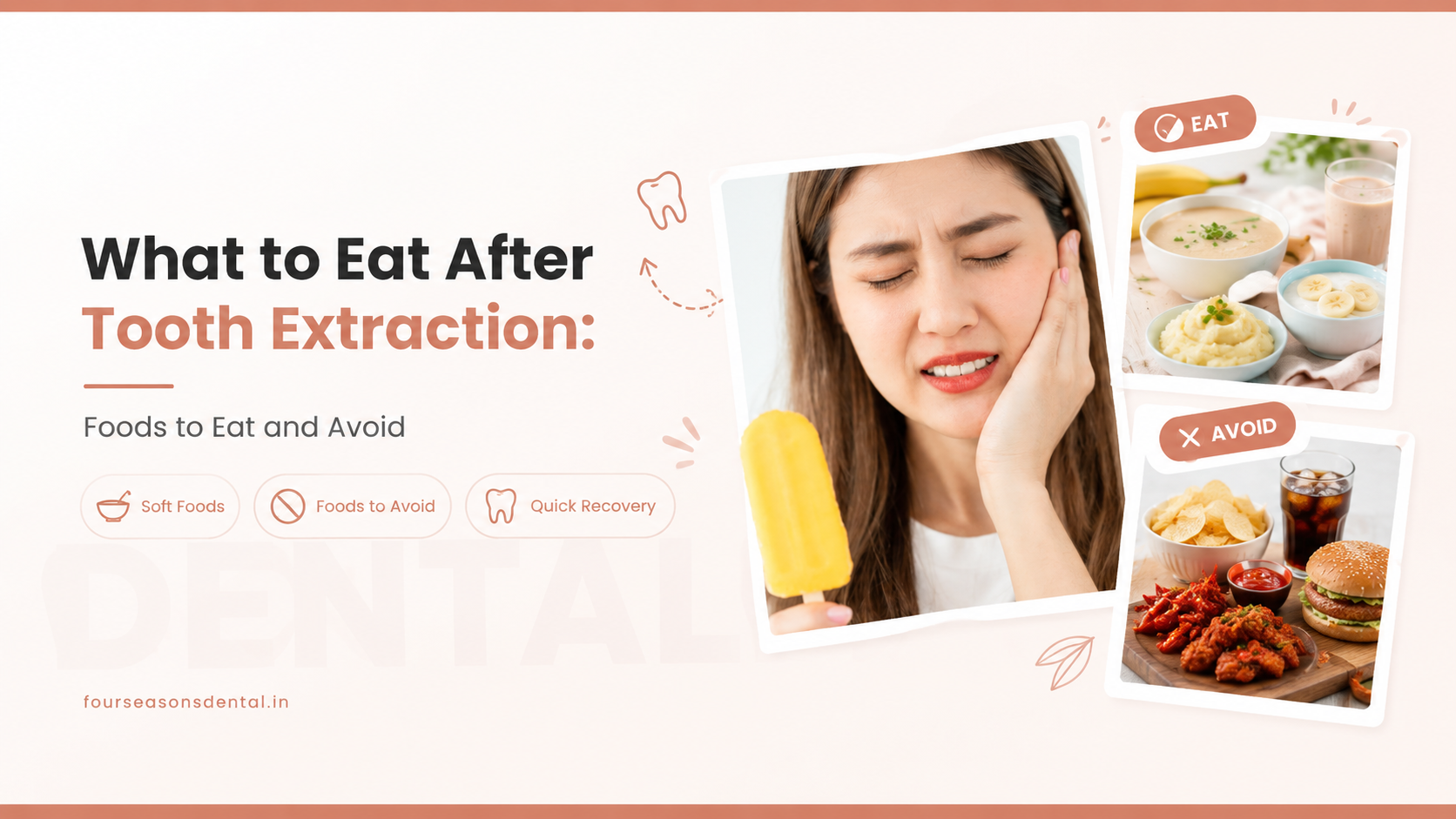
The short answer: for the first 24 to 48 hours after an extraction, stick to cool, soft, spoonable foods like yoghurt, mashed potato, and lukewarm soup, then add slightly firmer soft foods over the following week as the socket closes. What to eat after tooth extraction matters more than most patients realise, because the wrong bite at the wrong time can dislodge the blood clot protecting the bone underneath and lead straight to a painful dry socket.
At Four Seasons Dental, we see this question almost every day after a filling turns into an extraction, or after a wisdom tooth removal. Patients want a real answer, not a vague “eat soft food” line scribbled on a discharge sheet. So here is a proper, day-by-day breakdown of what to eat after tooth extraction, what to avoid, and why timing changes everything.
Why What You Eat After Tooth Extraction Matters So Much
Once a tooth is removed, a blood clot forms in the socket within the first hour. That clot is not decorative. It is the scaffold your gum and bone rebuild around. Hard chewing, sucking motions, or scalding hot food can knock it loose before healing has properly begun. This is the single biggest reason dentists obsess over what to eat after tooth extraction rather than just telling patients to “take it easy.”
A dislodged clot exposes bone and nerve endings directly to air and bacteria, and that is what causes dry socket, one of the most uncomfortable complications in dentistry. Getting the food choices right for the first week is cheap insurance against days of throbbing pain later. It’s also worth noting that not every tooth that looks like an extraction candidate actually is one; when the situation allows it, we discuss options like root canal treatment in Surat before deciding extraction is the only route.
What to Eat After Tooth Extraction: The First 24 Hours
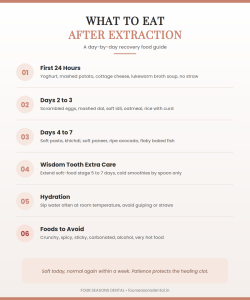
For the first day, keep everything cool or lukewarm, never hot, and skip the fork entirely.
Good choices in this window include thick yoghurt without fruit chunks, smooth mashed potato with a little butter, plain mashed banana, cottage cheese, protein shakes sipped slowly with a spoon rather than a straw, and lukewarm broth-based soup without solid pieces. Ice cream without nuts or crunchy bits is fine too, and the cold actually helps with swelling.
If someone asks what can I eat after tooth extraction on day one specifically, the rule of thumb is simple: if it needs a spoon and not a bite, it is probably safe.
Days 2 to 3: Building Back Toward Normal
By the second and third day, most patients can move on to slightly thicker textures while still avoiding chewing directly on the extraction site. Scrambled eggs, well-cooked and mashed dal, soft idli or dhokla soaked slightly, oatmeal, and pureed vegetable soups all work well here. Rice that has been cooked soft and mixed with curd is another kitchen staple our patients rely on during this stretch.
Chew on the opposite side of the mouth during this stage. Swelling and tenderness are usually at their peak around day two or three, so this is not the moment to test your limits even if the pain feels manageable. This is exactly the point in recovery where knowing what to eat after tooth extraction on a day-by-day basis, rather than following one blanket rule for the whole week, actually makes the difference.
What to Eat After Tooth Extraction: Days 4 to 7
From around day four, as long as bleeding has fully stopped and there is no sharp pain, you can introduce foods with a bit more texture: soft-cooked pasta, well-steamed vegetables, khichdi, soft paneer, ripe avocado, and baked fish that flakes apart easily. This is usually the stage where after tooth extraction food choices stop feeling like a restriction and start feeling like a normal, if gentler, diet.
Most straightforward extractions have closed enough by day seven for near-normal eating to resume, though the exact timeline depends on how many teeth were removed, your age, and how well the socket is healing. Your dentist will usually confirm this at your follow-up visit rather than leaving you to guess on your own. If the extracted tooth needs to be replaced down the line, that conversation about dental implants in Surat usually happens only once the socket has fully healed, generally a couple of months out, not while you are still on soft foods.
Foods to Avoid After Tooth Extraction
Some foods actively work against healing and should be off the table until your dentist clears you.
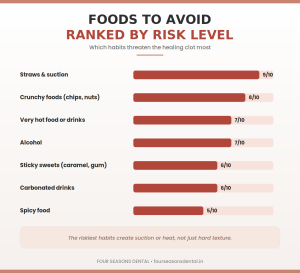
Crunchy items like chips, nuts, popcorn, and toast can leave sharp fragments lodged in the socket. Small seeds from strawberries, sesame, or poppy get trapped the same way and are surprisingly hard to flush out. Spicy food irritates the raw tissue and can genuinely sting for hours. Carbonated drinks and anything sipped through a straw create suction that can pull the clot loose, which is why straws are banned for at least a week regardless of what you are drinking. Alcohol thins the blood and slows healing, and very hot beverages or soup can dissolve the clot before it has properly set.
Sticky foods deserve a special mention. Caramel, chewing gum, and even some Indian sweets like gulab jamun can tug at the wound site and undo days of careful healing in a single bite. Knowing what to avoid is really just the other half of knowing what to eat after tooth extraction; the two lists work together, not separately.
Hydration matters just as much as food choice, and it is often overlooked. Sip water regularly rather than gulping it, and keep it at room temperature rather than ice cold or hot for the first two days. Staying well hydrated also makes it easier to keep the mouth clean without brushing directly over the socket, which most dentists advise against for the first 24 hours. Once the socket has closed and normal brushing resumes, getting back on schedule with routine teeth cleaning in Surat is what actually keeps the next extraction from becoming necessary.
What to Eat After Wisdom Tooth Extraction
Wisdom tooth sockets sit further back and tend to be larger, so the soft-food window usually runs a little longer than for a front or premolar extraction, often five to seven days minimum before firmer textures are attempted. Swelling around the jaw and cheek is also more common with wisdom teeth, which makes cold foods like smoothies, sipped by spoon rather than straw, and chilled yoghurt genuinely useful rather than just comforting.
Patients recovering from wisdom tooth removal often ask what to eat after wisdom tooth extraction as though it were a completely different list, and the honest answer is that the food choices barely change. What changes is how long you stay on each stage. If you had all four wisdom teeth out under sedation, plan for a full week of the soft-food stages above rather than rushing back to solid meals by day three.
Jaw stiffness is more common after wisdom tooth surgery too, which can make even soft food feel like an effort in the first two days. Warm, not hot, compresses on the outside of the jaw between meals tend to help more than anything you can eat, and smaller, more frequent meals are usually easier to manage than three large ones while the jaw is still tight.
Common Myths About Eating After an Extraction
A few ideas circulate that are worth correcting directly. Some patients believe skipping food altogether speeds up healing. It does not; your body needs protein and calories to rebuild tissue, so undereating actually slows recovery and can leave you dizzy or weak. Others assume that once the pain fades, the socket is fully healed and any food is fair game. Pain easing by day four or five means the surface is settling, not that the bone underneath has finished remodelling, which can take several more weeks.
There is also a persistent idea that dairy should be avoided because it curdles near a wound. There is no clinical basis for this claim, and yoghurt and cottage cheese remain some of the best options in the first 48 hours precisely because they are soft, cool, and protein-rich. When patients ask what to eat after tooth extraction and specifically whether dairy is safe, the answer is almost always yes.
Book Your Consultation
If you have questions about your own recovery, or you are due for an extraction and want a clear plan for what to eat after tooth extraction before it happens, book a consultation with Dr. Jay Patel at Four Seasons Dental. We will walk you through exactly what to expect, day by day, so healing stays on track from the very first meal. You can also browse the Four Seasons Dental blog for more recovery guides like this one.